Fotona Laser Treatments Myths You Should Stop Believing
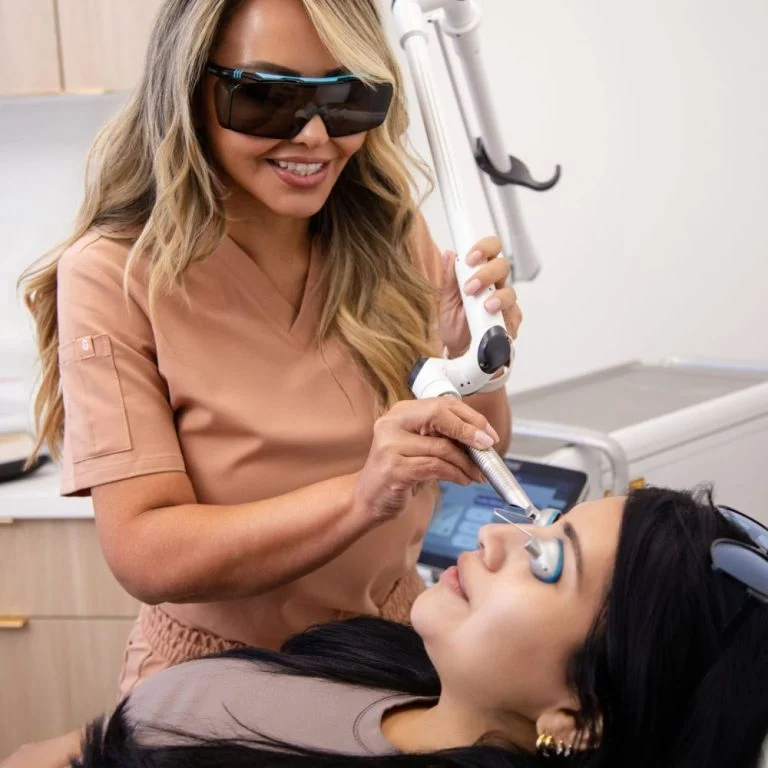
The reputation of laser aesthetics tends to swing between two extremes. On one side, people expect instant miracles. On the other, they assume every laser treatment is painful, risky, or only suitable for a narrow slice of patients. Fotona Laser Treatments sit squarely in that tension. They are widely discussed, often recommended, and just as often misunderstood.
Part of the confusion comes from the fact that Fotona is not a single treatment in the way many people think about a peel or a facial. It is a laser platform used for different goals, including skin rejuvenation, tightening, texture improvement, pigmentation concerns, acne scarring, vascular concerns, and even certain gynecologic and dental applications in appropriate settings. When people hear one dramatic testimonial or one horror story, they often assume it applies to every treatment done on every face and body area. That is where myths start to harden into bad advice.
I have seen this play out repeatedly in clinical consultations and patient conversations. Someone walks in convinced the laser will thin their skin, erase deep wrinkles in one session, or keep them housebound for two weeks. Another person dismisses it outright because a friend said laser is only for very fair skin. Often, neither belief is accurate. The truth is more nuanced, and that nuance matters because expectations shape both safety and satisfaction.
Why myths about laser treatments spread so easily
A lot of aesthetic misinformation survives because treatments are marketed in short phrases while results happen in real bodies, over real timelines. A social media video can show glowing skin thirty seconds after a session. It cannot explain how much of that glow is transient redness, post-treatment hydration, a well-lit room, and careful camera work. It also cannot explain how treatment settings are selected, why one patient needs conservative energy and another can tolerate more, or why collagen remodeling takes months rather than hours.
Laser terminology adds another layer of confusion. Patients hear words like ablative, non-ablative, resurfacing, tightening, fractional, erbium, Nd:YAG, and assume these are interchangeable. They are not. Fotona systems often combine different wavelengths and modes to target different tissue depths and effects. That flexibility is one of their strengths, but it also means broad claims such as "Fotona always has no downtime" or "Fotona always peels the skin" are immediately suspect.
Then there is the human tendency to reduce complex decisions into easy rules. If someone had a rough recovery after an aggressive resurfacing procedure, they may warn everyone off all laser work. If another person looked fresher after a gentle treatment, they may tell friends it is a risk-free lunch break fix. Both are oversimplifications.
Myth #1: Fotona Laser Treatments are all the same
This is one of the most persistent misunderstandings, and it causes trouble from the first consultation. Patients will often say, "I had Fotona before," as if that tells the whole story. It does not. The platform can be used in very different ways, with different settings, handpieces, pulse modes, depths, and treatment goals.
A patient seeking mild collagen stimulation before an event is not receiving the same intervention as someone treating acne scars, etched lip lines, or textural sun damage. Even within facial rejuvenation, a low-downtime protocol is not equivalent to a more intensive resurfacing session. The treatment plan may change based on age, skin quality, oiliness, history of pigmentation, tendency to scar, medications, and tolerance for recovery.
That distinction matters because outcomes and side effects are tied to the specific protocol, not just the brand name. It is the difference between saying "I drove a car" and "I completed a wet mountain descent in a manual transmission." Same broad category, very different experience.
If you are considering Fotona Laser Treatments, a useful consultation does not stop at the platform name. It should clarify what exact concern is being treated, which wavelength or mode is being used, how many sessions are expected, what the likely downtime is, and what a realistic endpoint looks like.
Myth #2: One session will fix everything
This myth survives because before and after photos are persuasive, and because many clinics understandably highlight their best transformations. What those photos rarely show is the treatment history behind them. A polished result may reflect a series of sessions, adjunctive skincare, strict sun protection, and months of collagen remodeling.
For mild dullness or a short-term refresh, one treatment can make skin look brighter and feel smoother. That is real. For deeper acne scars, laxity around the jawline, crepey texture under the eyes, or longstanding lines around the mouth, one session is usually not the whole story. Improvement often comes gradually, with gains building over time.
In practice, most responsible providers frame laser work as a process. Some concerns respond faster than others. Pigment sitting more superficially may shift sooner than scar depressions that need structural remodeling. Fine textural changes can show up early, while firmness and softening of lines may continue evolving for two to six months depending on the treatment intensity and the patient’s biology.
This is where honest planning matters. Patients are less disappointed when they understand whether the goal is 20 percent improvement, 50 percent improvement, or a maintenance boost. Laser medicine is rarely about perfection. It is usually about moving the skin in a better direction with acceptable trade-offs.
Myth #3: These treatments are unbearably painful
Pain is one of the first questions people ask, usually because they have heard either "it is nothing" or "it is brutal." Neither answer is useful without context.
Discomfort varies according to the treatment depth, the area treated, individual pain threshold, the presence of numbing measures, and the skill of the operator. A lighter rejuvenation session may feel like heat and snapping sensations that are very tolerable. A more aggressive resurfacing session, especially around thinner skin or sensitive areas, can be significantly more intense. Both experiences can happen under the Fotona umbrella.
What I find most helpful is to describe sensation honestly. Many patients do fine when they know what is coming. Heat tends to build. Certain zones, such as around the mouth or under the eyes, are often sharper than the cheeks. The first pass may be easier than later passes as tissue warms. Cooling strategies, topical anesthesia when appropriate, treatment pacing, and good communication make a substantial difference.
The bigger mistake is pretending pain never matters. If a clinic dismisses your concern with a breezy "you will barely feel it" and does not explain comfort measures, that is not reassuring. Professional laser work respects both efficacy and tolerability.
Myth #4: No downtime means no aftercare
This myth sounds harmless, but it is one reason people end up with preventable irritation or post-inflammatory pigmentation. Some Fotona Laser Treatments are marketed as low-downtime or minimal-downtime options. That can be accurate. It does not mean you can treat your skin carelessly right after the procedure.
Low downtime usually means you can resume much of normal life fairly quickly, not that your skin is unchanged. It may be warmer, drier, redder, or more reactive for a few days. More intensive treatments can bring swelling, bronzing, flaking, rough texture, or several days of social downtime. The details depend on the protocol.
Aftercare is not glamorous, but it shapes the result. Cleanse gently. Keep the skin comfortably moisturized with products your provider has approved. Avoid active ingredients too early if the skin barrier is unsettled. Be disciplined about sun avoidance and sunscreen, because recently treated skin is more vulnerable to pigment shifts. Patients who ignore that step are often the same ones who later insist the laser "caused spots," when the more accurate story is that untreated ultraviolet exposure complicated the recovery.
A sensible recovery checklist usually includes the following:
- Follow the exact cleansing and moisturizing instructions from your provider.
- Pause harsh acids, retinoids, and exfoliants until the skin has clearly settled.
- Use broad-spectrum sun protection and minimize direct sun exposure.
- Do not pick, scrub, or prematurely peel flaking skin.
- Report unusual blistering, prolonged swelling, or severe discomfort promptly.
That is not excessive caution. It is standard skin management after an energy-based procedure.
Myth #5: Laser treatments always thin the skin
This belief often comes from confusion between over-exfoliation and controlled dermal remodeling. Well-planned laser treatments do not simply strip the skin until it becomes fragile. Their purpose, in many protocols, is to stimulate regeneration and collagen remodeling in a controlled way.
Can skin look temporarily dry, flaky, https://www.google.com/maps?cid=15747598012322768060 or more delicate after treatment? Yes. Can overly aggressive settings, poor patient selection, or repeated procedures without adequate spacing create problems? Also yes. But that is very different from saying lasers inherently make skin thinner over time.
In fact, one reason appropriately selected patients seek Fotona Laser Treatments is to improve the appearance of thinning, lax, weathered skin. The goal is often better texture, better tone, and improved support from collagen changes below the surface. Results are not magic, and they vary, but the blanket statement that laser always thins skin is simply wrong.
The key phrase here is "appropriately selected." A patient with an impaired skin barrier, inflammatory skin disease, recent isotretinoin use in certain contexts, poor wound healing history, or unrealistic treatment frequency may need a different plan. Expert judgment matters more than slogans.
Myth #6: Fotona is only for older patients with wrinkles
Wrinkle reduction gets most of the attention, but it is far from the only reason people consider this technology. Younger patients may pursue treatment for acne scarring, enlarged pores, early textural change, redness, or prevention-minded collagen support. Men often seek jawline refinement, skin tightening under the chin, or improvement in shave-related texture. Patients in their thirties sometimes want subtle refreshment without looking "done." Patients in their fifties and sixties may use it as one part of a broader maintenance strategy.
Age is less important than indication. I have seen a 28-year-old benefit from carefully staged scar-focused laser work, while a 58-year-old with severe volume loss was better served by discussing combinations and realistic limits, because no laser alone was going to restore structural change created over decades.
That is another myth worth dropping, the idea that a treatment is either preventive or corrective. In reality, aesthetic care often blends both. Someone may use periodic laser sessions to maintain skin quality while also addressing a specific concern.
Myth #7: It is unsafe for anyone with more melanin-rich skin
This myth is rooted in a real concern but gets stretched into a false absolute. Historically, some lasers carried greater risk in darker skin tones because of how melanin competes as a target, increasing the chance of burns or post-inflammatory hyperpigmentation when the wrong settings or devices are used. That history still matters. It should make providers careful, not fatalistic.
The honest answer is that treatment in melanin-rich skin requires thoughtful device choice, parameter selection, pretreatment planning in some cases, and disciplined aftercare. It is not a one-size-fits-all exercise. Some indications and protocols are better candidates than others. Conservative settings and gradual treatment may be smarter than chasing dramatic change in one session.
What patients should avoid is a clinic that says either "we treat everyone exactly the same" or "laser is never an option for your skin tone." Both statements suggest a lack of nuance. Safer care lies in the middle, where the provider understands the risk of pigment alteration and plans around it.
Myth #8: If results are subtle, the treatment failed
This is a common disappointment trap, especially for patients used to the immediate visual impact of injectables or swelling-related post-procedure fullness. Laser results can be subtle in the best way. Skin may reflect light better, makeup may sit more smoothly, pores may look less obvious, and the face may appear fresher without announcing why.
Those changes do not always photograph dramatically, especially under different lighting. But they are meaningful. Many patients actually prefer that. They want to look less tired, not transformed. They want friends to comment that they look well, not ask what procedure they had done.
Of course, subtlety can also slide into under-treatment. This is where pre-treatment photography, consistent lighting, and clear goal setting are valuable. If the stated target was noticeable scar softening and after several well-executed sessions there is negligible change, the plan may need adjustment. But if the goal was refinement, a result that reads polished rather than dramatic is not a failure.
Myth #9: More aggressive always means better
This belief causes more regret than people realize. A stronger treatment can sometimes produce bigger gains, but it also raises the stakes. More heat, more depth, and more tissue disruption may mean more downtime, more discomfort, and higher risk of adverse pigment changes or prolonged redness in the wrong patient.
There is a reason experienced laser practitioners do not treat every concern with maximal intensity. They weigh the target, the skin type, the patient’s schedule, prior responses, and the tolerance for recovery. A bride with six weeks until her wedding, a person with a history of lingering post-inflammatory pigmentation, and a patient starting on retinoids after years of barrier damage are not ideal candidates for the same aggressiveness.
Sometimes the best work is not heroic. It is strategic. Two or three measured sessions may outperform one overly intense treatment because the skin remains calm enough to recover cleanly.
Myth #10: The laser itself guarantees the result
Patients often shop by device name, and device quality does matter. But the machine is only one part of the outcome. The provider’s assessment, parameter choice, treatment pattern, safety habits, and post-treatment guidance are just as important. The fanciest platform cannot rescue poor judgment.
Think about all the variables at play. Was the diagnosis correct? Were the expectations realistic? Did the patient disclose recent tanning, medications, cold sore history, or prior complications? Was the endpoint during treatment appropriate? Was aftercare explained in plain language? These details are where experienced practice shows up.
If a consultation revolves almost entirely around brand prestige and barely touches candidacy, risk, or alternatives, that is a warning sign. Good laser care is not a sales pitch. It is a matching process.
What a smart consultation should sound like
You can tell a lot about a laser practice from the first fifteen minutes. Responsible providers usually ask detailed questions before making promises. They want to know what bothers you most, how much downtime you can tolerate, what procedures you have had before, whether you pigment easily, and what products or medications you are using.
They also talk about limits. If deep static folds are unlikely to vanish with laser alone, they should say so. If melasma is part of the picture, they should explain that heat can be tricky and that skin management may need a broader strategy. If your expectations exceed what the treatment can deliver, that conversation should happen before any photos are taken.
Here are a few signs you are getting a grounded recommendation rather than a rehearsed pitch:
- The provider explains which specific concern the treatment is meant to improve.
- You get a realistic timeline, not a promise of instant perfection.
- Risks are discussed plainly, including redness, swelling, pigment change, and variable response.
- Alternatives or complementary treatments are mentioned when appropriate.
- Aftercare is treated as part of the procedure, not an afterthought.
That kind of conversation may feel less exciting than flashy marketing, but it usually leads to better decisions.
The real trade-off patients should understand
The honest appeal of Fotona Laser Treatments is not that they defy biology. It is that they can improve skin quality in ways that feel natural, layered, and versatile when used well. They are often valuable precisely because they sit between extremes, more powerful than basic topical care, less invasive than surgery, and adaptable across several concerns.
The trade-off is that results depend on judgment, consistency, and patience. You may need multiple sessions. You may need to combine laser with good skincare, pigment control, vascular management, or other treatments. You may have to respect sun restrictions more seriously than you expected. And you may need to accept improvement rather than fantasy.
That is not a flaw. It is how responsible aesthetic medicine works.
People tend to be happiest with laser when they stop asking, "Will this make me flawless?" And start asking better questions. Will this improve the concern that actually bothers me? Is the downtime acceptable for the likely gain? Is my provider being specific, careful, and honest? Those questions cut through almost every myth on the list.
When patients drop the myths, they usually make calmer and better choices. They stop chasing miracle claims and start looking for fit. That shift alone often leads to safer treatment, stronger trust, and results that hold up not only in before and after photos, but in ordinary daylight, where real skin lives.
OMNIA Wellness Center
Address: 16430 Ventura Blvd Ste 207, Encino, CA 91436
Phone number: +18183868511
FAQ About Fotona Laser Treatments
What is a Fotona laser good for?
A Fotona Laser system is a versatile, dual-wavelength medical laser used primarily for non-surgical skin tightening, anti-aging rejuvenation, and dermatological treatments.
How much does the Fotona laser cost?
The cost of a Fotona laser depends heavily on whether you are looking to purchase a laser machine for a medical practice or are a patient seeking a laser treatment at a medspa.
Is a Fotona laser worth it?
A Fotona laser treatment is generally worth it if you want non-surgical skin tightening, improved texture, and collagen stimulation with very little downtime.